
Cartierville Cultural and Community Center: a new purpose for a place steeped in history


Thanks to a sensitive and integrated approach, Cardin Julien’s team transformed the former residence of the Sisters of Providence (1976) into a community and intergenerational space open to its community. The intervention highlights the architectural richness of the site while meeting the current needs of families, local organizations, and neighborhood residents.
A project with social impact
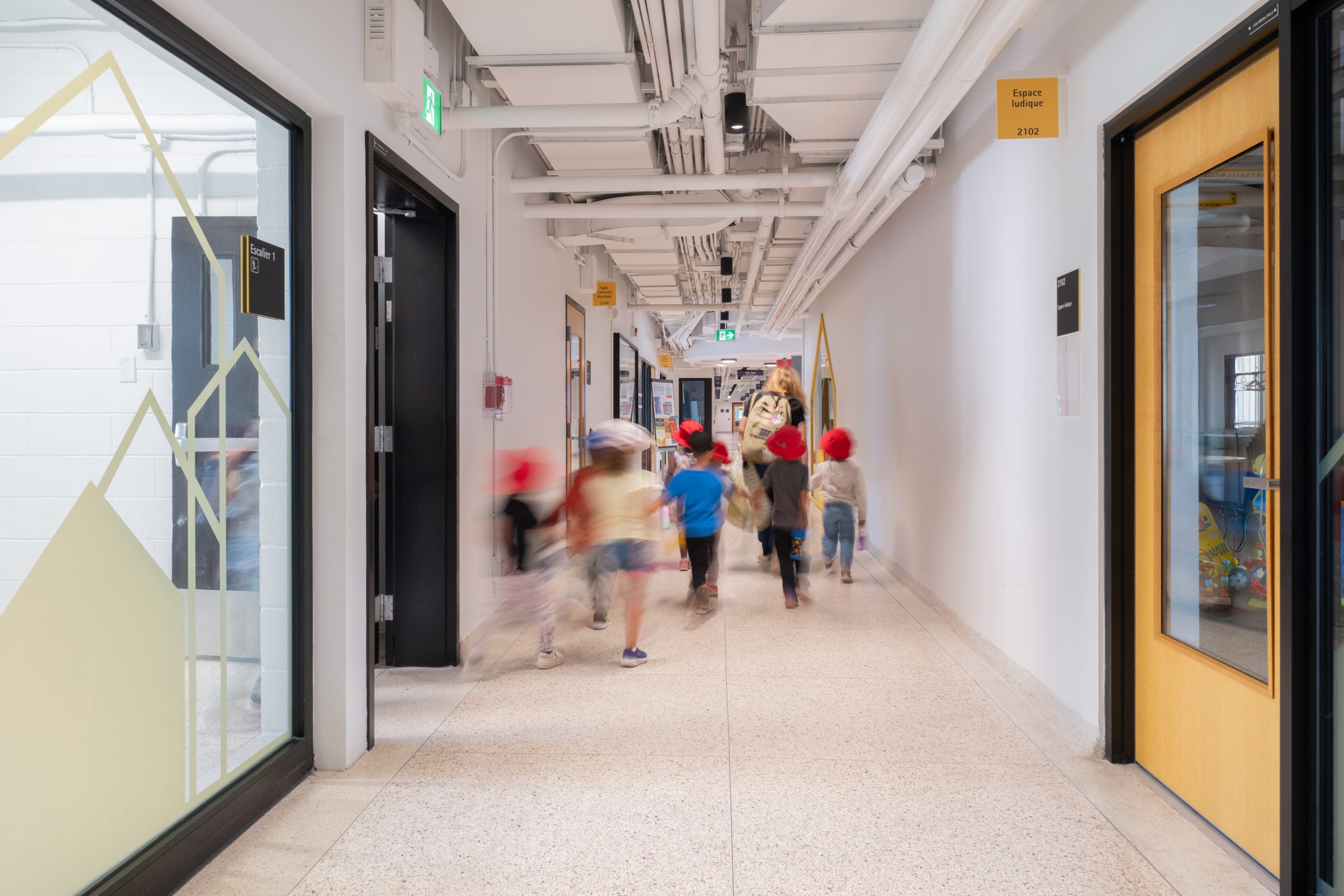
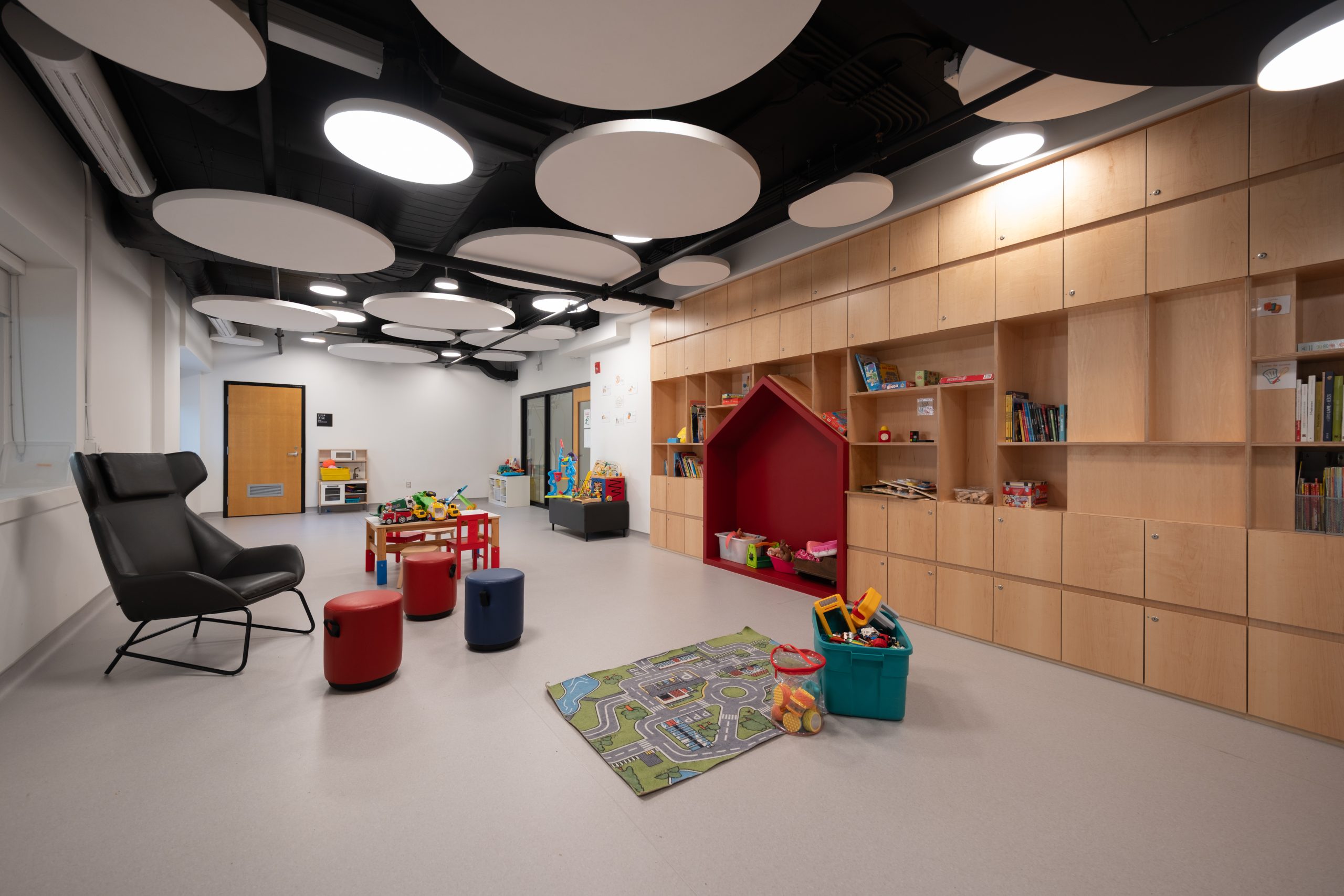
Located in a large institutional sector of the Bordeaux-Cartierville borough, this heritage building stands out for its historical character and remarkable architectural and artistic qualities. Mandated to renovate and transform part of this complex, Cardin Julien worked to preserve the soul of the place while giving it a new community purpose. The project consists of the redevelopment of two of the four original wings to accommodate a wide range of services and multipurpose spaces: community rooms, municipal offices, a daycare center, premises dedicated to social economy organizations and businesses, retail spaces, a communal kitchen, and a large meeting hall that encourages interaction.
Heritage showcased
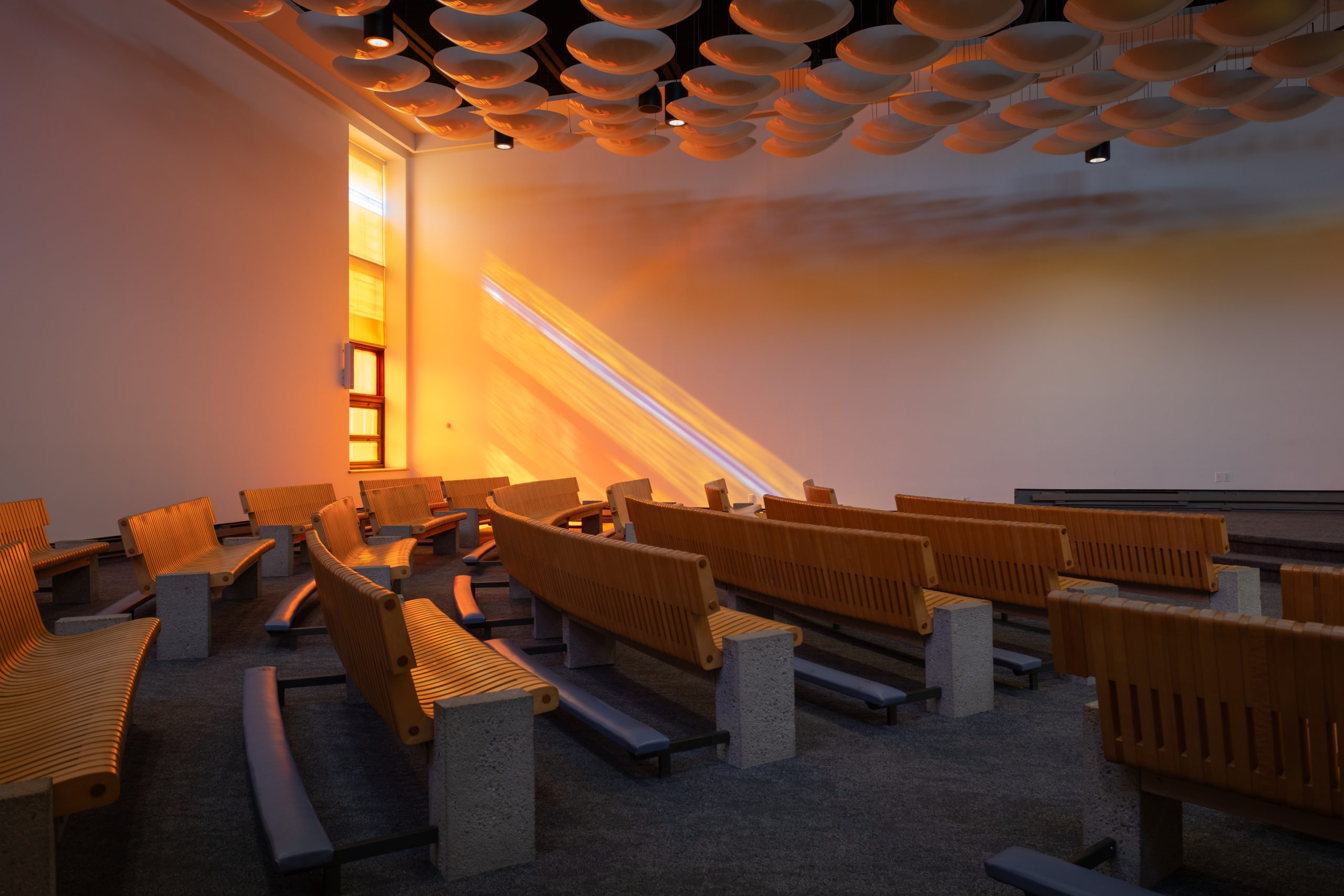
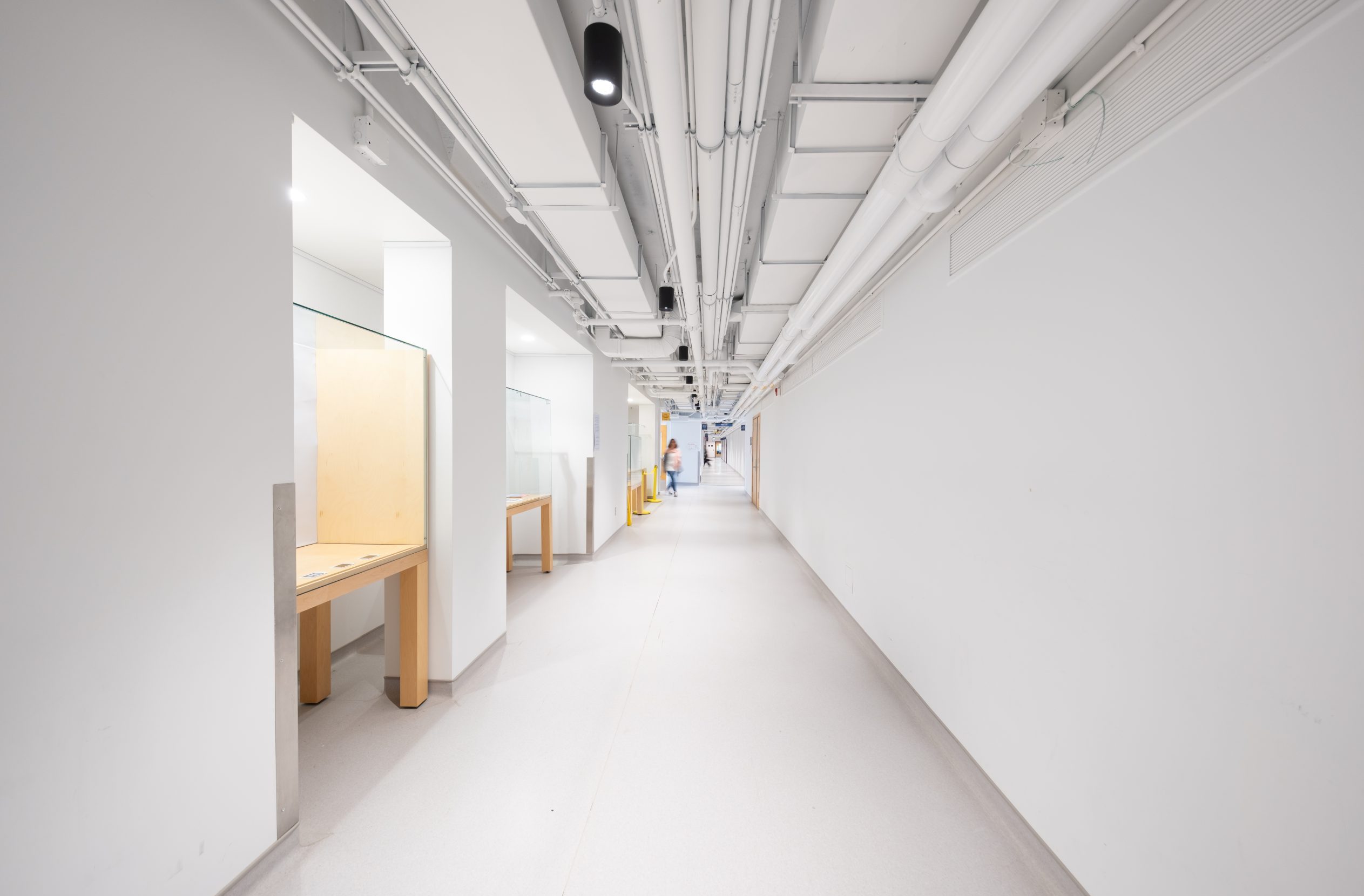
The old chapel, carefully preserved, has been reinterpreted as a multipurpose hall, allowing events, shows, and cultural activities to be held in a setting steeped in history. The original furniture and liturgical objects designed by artist Charles Daudelin (1920-2001) have been recovered, restored, and reintegrated into various spaces within the project. The stained glass windows by Quebec artist Marcelle Ferron (1924-2001) have also been preserved and integrated into the architectural design, as have the original terrazzo floors, which have been meticulously restored to ensure their longevity. An interpretation area tracing the history of the building completes the ensemble and reinforces the transmission of the site’s memory.
A bright and unifying architectural concept
The design approach aimed to reveal the building’s historical and spatial qualities while creating a welcoming, bright, and functional environment. The materials, the treatment of the openings, and the integration of meeting spaces contribute to making this center a true living space for the community.